What does a pilot cost us?
Nothing. You give us one vehicle, and space and power at a site you choose. We build the Swapp Station, fit the vehicle and run the pilot with you. You see the results in your own operations before you commit.
Can our diesel or CNG vehicles switch?
Yes, for buses and trucks. Our electrification partner converts your vehicle into an EV and installs our swapping tech on it. You keep the vehicles you own, instead of buying a new fleet. We plan with you which vehicles to convert first.
Can our EVs already on the road switch to swapping?
Yes. If your vehicle is an EV, it is easy. When its battery needs replacing, move it to our platform instead of buying a new battery. We fit the Portal, and from then on it swaps in a minute.
Where do the Swapp Stations go?
Where they serve your fleet best: at your depot, or along your routes. We study your routes, schedules and duty cycles, and plan each station around your specific needs. As your fleet grows, we add stations where you need them.
How much space does a station need?
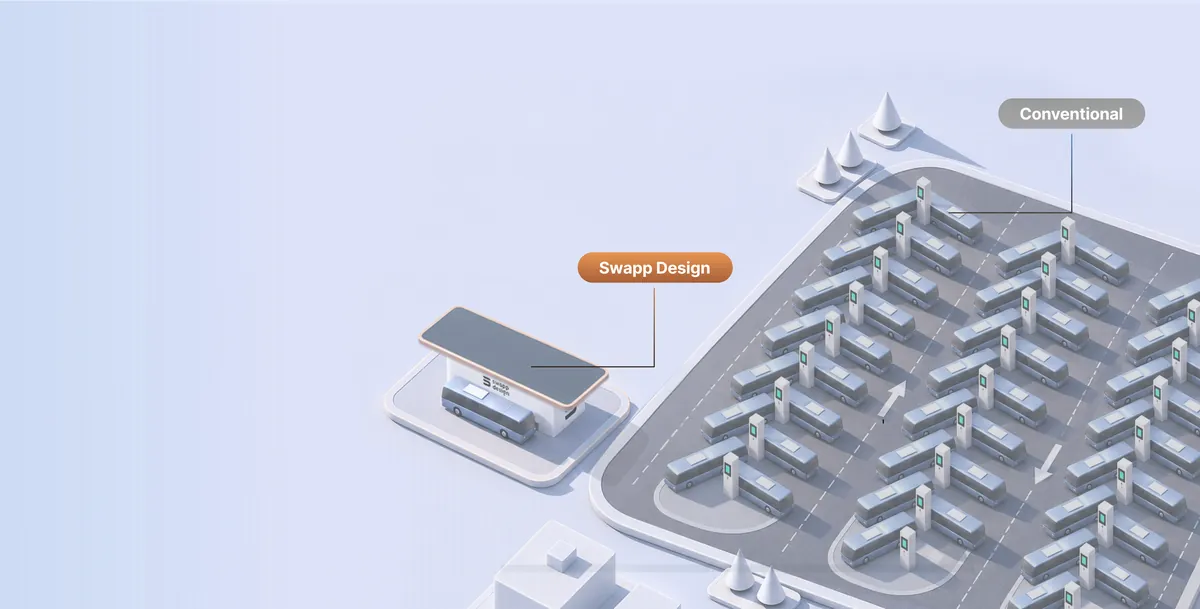
From 100 sq ft for LCVs, and 300 sq ft for buses and trucks. A 300 sq ft bus station serves 16 buses an hour. DC fast charging needs 32x the space for the same number of buses. Against slow charging, the gap is even larger.
How much power does a station need?
It depends on your fleet size and operations, and we work it out with you. We expect power to already be available at your depot or charging site. A Swapp Station works with that same power.
Will vehicles queue at the station?
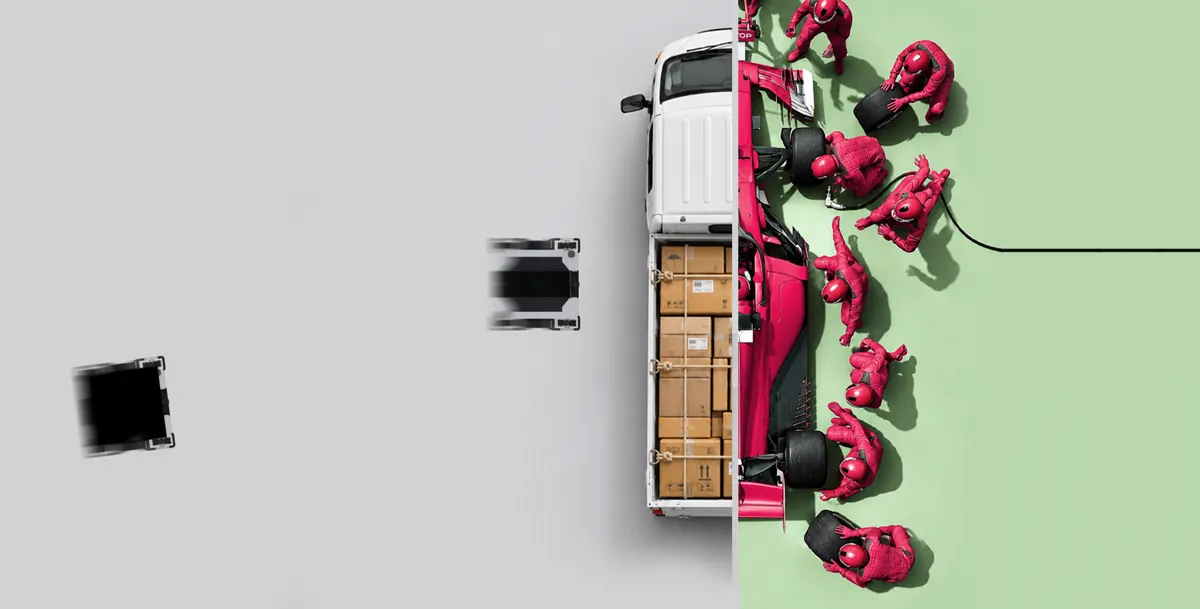
No. Swapp OS knows which vehicle will reach which station, and when. It charges the next battery before the vehicle arrives, so the battery is ready and waiting. Each swap takes a minute, so even a rush clears fast.
Who owns the battery and the station?
We do. We build, own and run every Swapp Station, and we own the batteries. You pay a fixed fee per km, so your cost is predictable. There is no battery or station on your books.
Can the vehicle still charge on board?
Yes. An on-board charger can use slow AC charging as a backup, for example on a rare trip outside our network. Day to day, it swaps in a minute. Your vehicle is never stranded.
What happens if something fails?
Several safety systems back each other up, so a single failure does not stop the swap or the EV. In a regular EV, a battery fault stops the vehicle. With us, the driver is prompted to swap and is back on the road. The faulty battery is fixed by an update in the station, or at our facility.