EV battery swap in 1 minute. Autonomously.

Uninterrupted, affordable mobility for commercial EVs.No oversized battery. No oversized grid.

Swapp autonomous battery swapping station, SwappBot and electric commercial vehicle in a bright industrial facility
10+ EVsSwapped per hour, per station
25x lowerStation capex vs global peers
3x smallerBattery, and still runs all day
25%+ lowerOperating cost, per kilometre
The problem

The energy is there. It just can’t flow.

Energy availability 8.1 TWh

of solar wasted in just Q2, 2026

↑ from 2.3 TWh over 8 months of 2025

The real cost
Power billsPollution
  • India paid ₹690 crore in 2025 to waste solar that could run 30,000 e-buses for one entire year.
  • Storing it in battery banks (BESS) doubles the power price, from ₹3 to ₹6.2 per kWh.
Energy delivery 2 buses

strained a Tier-1 city’s grid

Charging together, in Bengaluru, 2025

The real cost
Grid costsReliability
  • Ad-hoc fast charging asks for more power than the local grid can give.
  • Voltage drops for every shop and home on that line, and each new depot needs a costly grid upgrade.
Energy storage 3 tons

of battery dragged by every e-bus

↑ from 120 kWh to 250 kWh per pack

The real cost
EfficiencyTrade deficit
  • Every heavy EV burns energy just to carry its own battery.
  • More imported lithium widens India’s trade deficit and prices buses out of export markets.

Three problems. One cause. The wrong energy flow architecture.

The solution

Two clocks. Desynchronised.

  • Decoupling the battery from the EV fixes how energy flows.
  • Batteries charge without stopping the EV. No rush. Calm grid.
  • EVs focus on uninterrupted mobility.

Batteries, optimised forA stable grid and less wasted solar

EVs, optimised forUninterrupted mobility of people and goods

How it works

Drive in. Swap. Drive out.

0:00Swap time
  1. Step 1Approach and stop

    Pull up to the Swapp Station at any angle, no lining up. The driver stays seated.

  2. Step 2SwappBot aligns and swaps

    It slides under the EV, however it’s parked, and swaps in a full battery. The driver relaxes.

  3. Step 3Checked and cleared

    A full system check, then the station signal turns green. The driver drives off.

Autonomous Battery Swapping. In Action.

The intelligence lives in SwappBot. Not in the floor.

Where the 25x lower capex comes from.

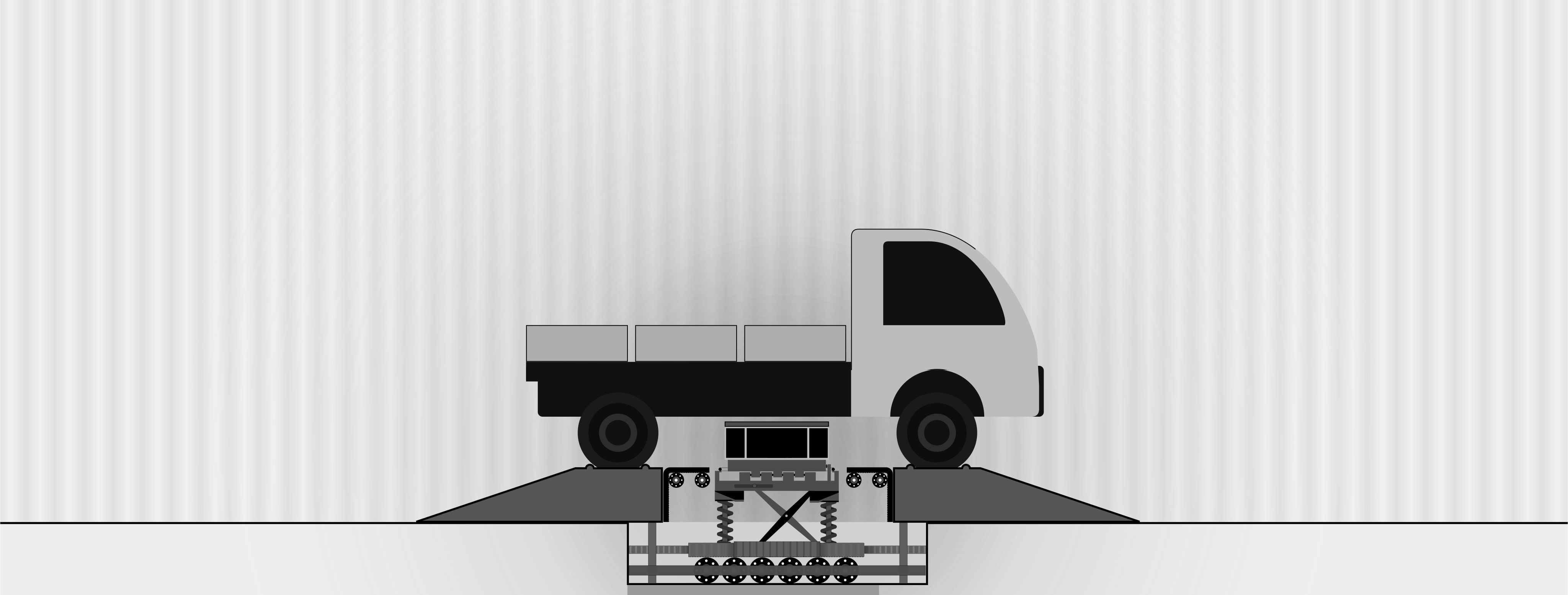
Conventional battery swapping: vehicle positioned above an in-ground swapping mechanism with sloped approach ramps.
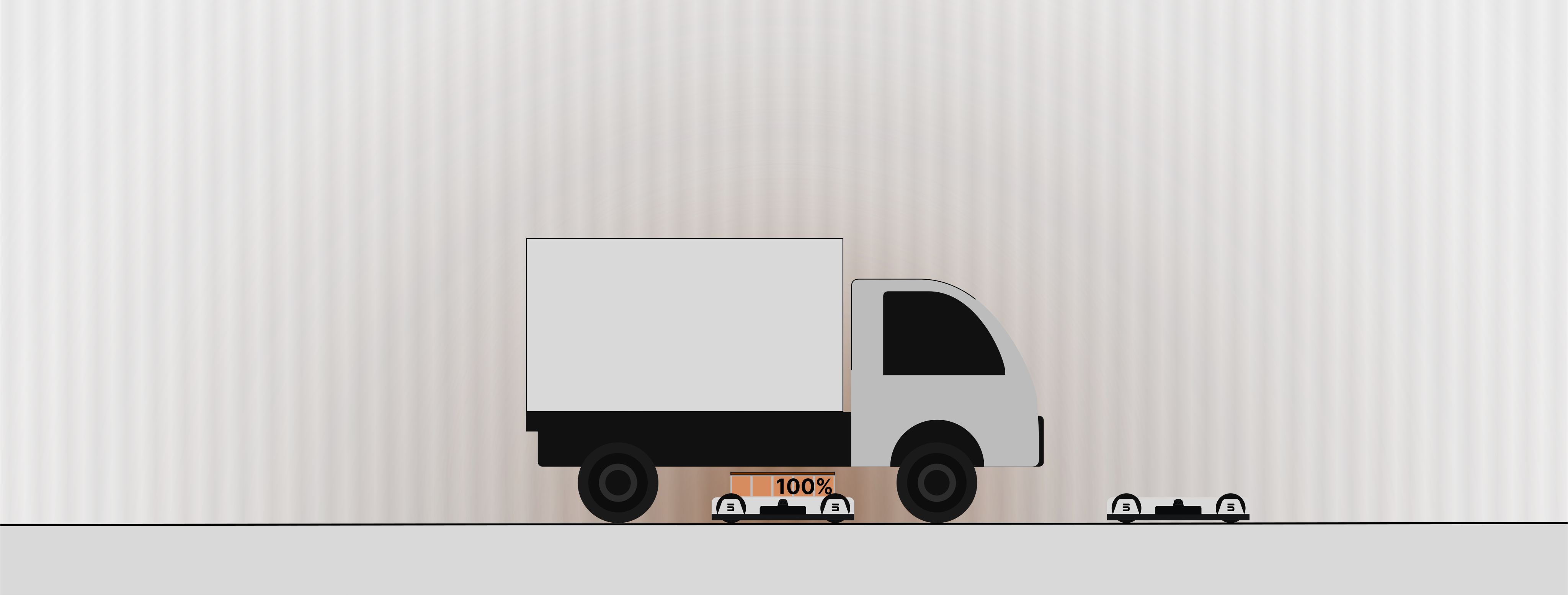
Swapp Design: vehicle on a flat surface with battery supported by a SwappBot and a second bot standing by.

CONVENTIONAL

  • One EV at a time
  • Equipment underground
  • EV aligns to the station
Higher Capex
Lower Throughput, Scalability

Swapp Design

  • Many EVs at once
  • No pit. Just a flat floor.
  • SwappBot aligns to the EV
Lower Capex
Higher Throughput, Scalability
Swapp OS

Every hero needs a director. Meet Swapp OS.

SwappBot does every stunt itself. But first, Swapp OS reads the grid, battery health,
the next EV’s arrival and a hundred other signals, then calls “Action” on the right SwappBot.

System What it does Engines Optimises for

In the spotlight. In our words.

Republic BusinessSep 2026

A Tale of Two Buses

How fixed batteries strain the grid, and why swapping is the right architecture.

CNBC-TV18 Young TurksJan 2025

Autonomous swapping, explained

Why getting back on the road with a full charge, fast, matters to every commercial EV user.

CNBC-TV18 · MoneycontrolDec 2024

LeapToUnicorn Season 2 finalist

Inside our Innovation Studio, and why Seafund backed us.

Early backers
  • Sanchi Connect
  • IITM Incubation Cell, IIT Madras Research Park
  • Seafund
  • Ev2 Ventures
  • Thinkuvate
  • FAAD
  • Mukesh Sharma Family Trust
Swapp Design · Videos